Tuesday, 29 January 2019

Beginning, Middles and Ends


Beginning. (10%) When a short film begins, the audience wants to know immediately who it is following and what the story is about. They're waiting hot with anticipation. They want to figure it all out. 
Generally, the beginning needs to include most, if not all, of the following to get the story going:
  • The setup
  • a hook (what is different about your story? Has it been done before?)
  • a fast opening
  • an inciting incident - what starts the story moving?
  • introduce the protagonist. what does he or she want?
  • introduce a problem, dilemma or predicament
  • introduce the antagonist - what do they want?
  • introduce the story's world - its location setting and time
  • what kind of story is it? it stone, style genre
  • raise a central question - is there a premise for a theme?
  • indicate what's a stake for the protagonist
  • introduce a key conflict to get the action moving.
Tips!
This may seem like a lot but much can be done simultaneously. A strong opening image can tell us much about the story's world.
The inciting incident should occur as close to the start as possible. Begin with it if you can.
Quickly introduce the character's problem. what they want and what's at stake. 
Introduce the antagonist early on as well. 

Middle (80%)

  • Pace, don't let your story sag
  • Raise the stakes for both sides of the conflict
  • Don't get sidetracked into a subplot or secondary issue
  • Keep the antagonist strong for the final battle
  • Use surprise setbacks and reversals, add difficulty

Tips
The greatest setback or obstacle for the protagonist should occur somewhere towards the end of the middle section.
In a short film, there will probably only one or two obstacles due to the time constraints of the form.
It should be intense, full of rising tension and suspense and promise a dramatic end.
False resolutions can be used to add interest.

End (10%)

New! Short films to study and be influenced by :)


I am aware that The Swimmer and The Grandmother might not have been choices of films that you may have made. Therefore, I am encouraging you to watch your own selection from the list below. Please ensure that you have 80mins+ of running time under your belt.

I would imagine that most of you will leave in:
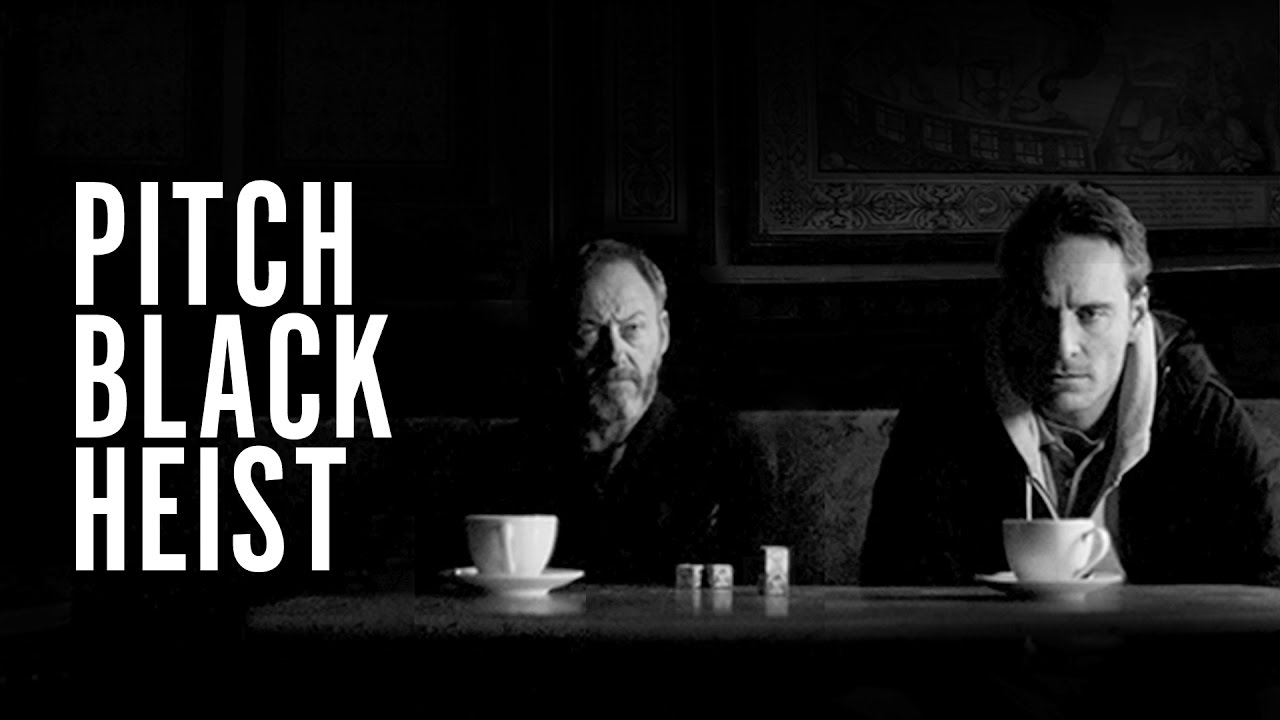
  • Pitch Black Heist (Maclean, UK, 2012) 13’ 
  • Curfew (Christensen, US, 2012) 19' 
  • The Gunfighter (Kissack, US, 2014) 09'. 
=35 mins. 45 mins remaining!

Choosing the shorts 
It is important to select films that may have an impact or influence over the choices in the production options.  It may be sensible to group selections of films from the menu of short films, perhaps categorising them by style, or theme, or structure. It may be worth looking at these groups to research based on the genre you wish to work in. 

Here is one such set of groupings based on genre. (Note, you may need to study two groups in order to meet the 80 mins requirement)

Surreal or alternative in structure
Meshes in the Afternoon (Deren, US, 1946) 14’
La Jetée (Marker, France, 1962) 28’
La Ricotta (Pasolini, Italy, 1963) 34’

Stylised or documentary style
A Girl’s Own Story (Campion, Australia, 1987) 26’
Elephant (Clarke, UK, 1989) 39’
About a Girl (Percival, UK, 2001) 09'

Animation
The Grandmother (Lynch, US, 1970) 34’
The Wrong Trousers (Park, UK, 1993) 30'
When the Day Breaks (Forbis/Tilby, Canada, 1999) 09'

Social realist (ish)
Wasp (Arnold, UK, 2003) 24'
Connect (Abrahams, UK, 2010) 05'

Films with a ‘twist’
High Maintenance (Van, Germany, 2006) 09'
Pitch Black Heist (Maclean, UK, 2012) 13’
Curfew (Christensen, US, 2012) 19'
The Gunfighter (Kissack, US, 2014) 09'.

Interesting/experimental narrative structure
Night Fishing (Park, South Korea, 2011) 33’
Swimmer (Ramsay, UK, 2012) 18’
Stutterer (Cleary, UK, 2015) 12'.

It should be noted that there is no ‘correct’ way of grouping the films, but rather it is about finding a method that could inform the production and be easy to reference in the Evaluative Analysis.  It may be useful to group them around the four concept briefs from the Specification. 

Next become familiar with the films.  Look at them for the way their narrative structure works.  Look at them for particular stylistic features.  Look at them for particular instances of use of micro features.  Most importantly look at them for elements that can inform and influence a production.  Note these down for use in the film or screenplay production and for later use in the Evaluative Analysis.

You are encouraged to use this research to create a film or screenplay where the identified elements are to the fore (remember the purpose of creating this is to meet the assessment criteria).  They can be referenced directly (an ‘homage’, use of similar narrative structure, similar use of micro features, etc.), or more obliquely – they will be identified and unpicked in the Evaluative Analysis.

Wednesday, 23 January 2019

More short story ideas


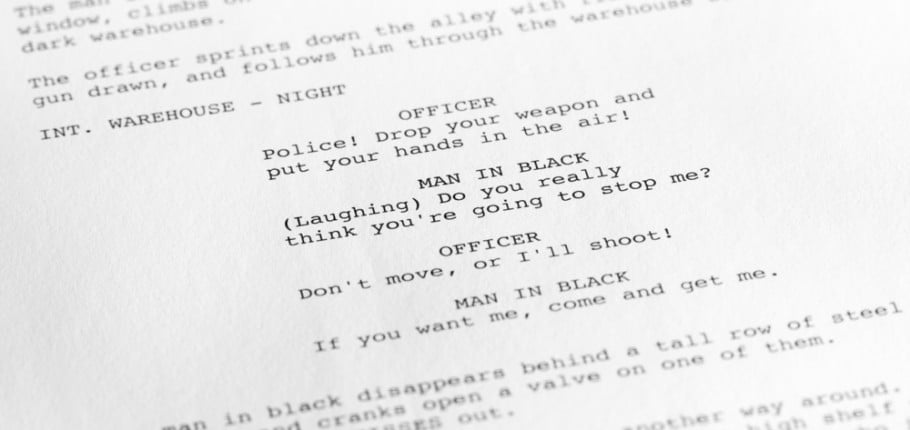
As room 41 is closed on Tuesday, I will set the task of writing new ideas for your screenplay. You should spend at least 3 hours of your time (2 x homework, 1 hr classtime) coming up with ideas and changing up elements to get them as interesting and original as possible. 

Please ensure that your story corresponds to one of the following briefs:
a narrative twist
a narrative which begins with an enigma
a narrative which establishes and develops a single character
a narrative which portrays a conflict between two central characters.

Please ensure you come to lesson with evidence of three hours of working out and writing.

Tuesday, 8 January 2019

Five finger pitch


Create a detailed five finger pitch from one of your ideas so far...
There is a link to the process here

Monday, 7 January 2019

Narrative Techniques - Independent study


Worksheet HERE

On the worksheet, you will find reference to many of the most widely recognised and used narrative techniques from literature and scriptwriting. Some may be more familiar than others and similarly some may be best not being used in our own script. However, this resource asks you to consider each as a possibility by finding examples of as many as possible. This will allow you to then explore how useful or interesting each one is.

To complete the table, read the definition of each technique and then try to find as many examples as possible by writing the example in the empty column. You will need to conduct your own research to find examples of each, but some are much more common than others! 

Find original answers. Do not have the same ones as your friends.

Deadline: Tuesday 15th Jan 2019

Tuesday, 11 December 2018

Find ideas around you - Independent study


Find ideas around you
Ideas for film scripts can be found all around you. Here are five different places to find inspiration and ideas that you may not have thought of. 

Task:
Choose three to kick-start an idea and then develop them using the 5 Ws.
Bring in your written up developed story idea and the original piece of inspiration. 

Deadline: Start of the lesson, Tuesday 18th of Dec.
Any issues? deh@thomasadams.net

Rewrite a scene from a story that you like.
Choose an unimportant and certainly not ‘iconic’ scene from a favorite book, comic or video game. Make sure that you adapt the story and characters so that it suits the tone of your film or genre but also add new elements or unique changes that make the scene that little bit more important.

Be a spy.
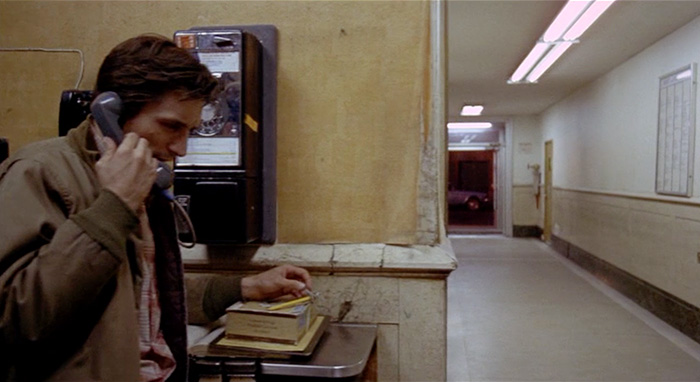
This one might not be for everyone, but a classic movie-trope, a spy trying to find out information. When out in public be mindful of people around you. Can you see someone who looks interesting or looks like there might be more to them than what you can see? If they were a character in your chosen genre, would they be the protagonist, a love interest or maybe a classic villain? Keep an ear out also; being respectful and polite, conversations of other people can be fascinating starting points for ideas. Catching the middle of a chat could be an interesting prompt for your story as can a group of people chatting away. Being respectful and polite is key here though. 

Check your emails.
Find junk or spam email. Use it to form the basis of a story by imaging that you are the person sending the email and that it’s a genuine call for help or advert for a miracle product. Or, you could consider what happened if you replied and it turned out to be genuine, or if replying to the email did something to you or your computer.

Use Facebook.
Have a look at Facebook, choose a photo of someone you don’t know well and imagine them as a character in your chosen genre. For example, if you were creating a science fiction film for example, could this be the last photo they took before trying a time travel machine for example? If you’re creating a teenage film, maybe this is a photo they used for their school year book-why was this photo so significant? The idea here is to not use your ‘friend’ and their real life, instead to use your imagination in the chosen genre and to use the photo as a spark of an idea to develop a story from. And make sure that you don’t use their real name.

Rewrite the news.
Find a news story, it could be about absolutely anything. Now twist the details so that it fits the generic conventions of the genre you’re working in. Changing the setting is probably the easiest way to start; a story about a robbery in a bank might not be that interesting, but it becomes a story about a robbery of a fuel storage facility on Mars, it suddenly becomes the basis for an interesting science fiction story for example

Tuesday, 4 December 2018

Burroughs’ ‘cut-up’ method - Independent Learning Task


William S Burroughs on writing and cut-ups

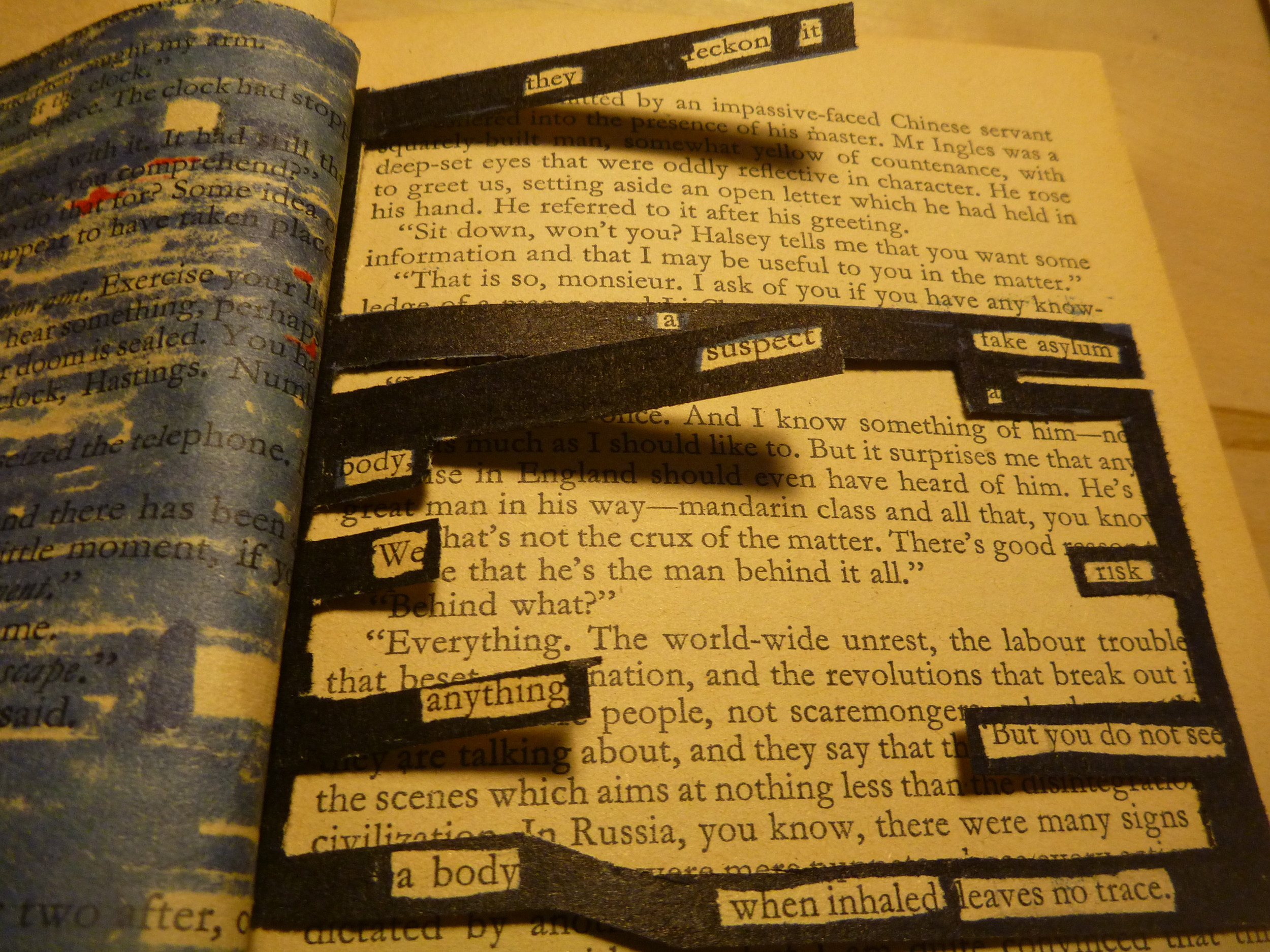
Chance and random elements often jog our creativity. That’s why many writers who have writer’s block Google ‘story generators’ or ‘writing prompts’. The American author William S. Burroughs would take a text and cut it into strips of individual words and phrases, then rearrange them at random to create new sentences.

Aleatory (using chance and random elements to find new ideas) techniques have yielded interesting results throughout literary history. The French group of writers, OuLiPo, used made up constraints to write inventive novels. For example, Georges Perec wrote his novel La Disparation without using the letter ‘e’ (the most common in the French language). This constraint forced the author to find ideas and phrases beyond habit.

Task:
Get an old, battered second-hand book. Cut up a few pages into strips of words and phrases with a pair of scissors. Jumble these up and place some at random on a page (or choose your options more carefully). Does a line or phrase (or strange pairing) spark a story idea? Do a load.

Bring in your stuck down lines of inspiration and evidence of at least one that has been developed into an interesting story idea.
Use the 5W's to help develop your ideas fully. 

Deadline: Start of the lesson, Tuesday 11th December